


Colombia Compra Eficiente, the national public procurement agency that manages the country’s public purchasing system megaplatform, is once again under suspicion in this outgoing government.
Last Friday, the Defensores de la Patria movement stated that the anti-corruption transition team of Abelardo De La Espriella’s government filed four complaints with the Attorney General’s Office and the Comptroller General’s Office for alleged irregularities in millionaire contracts, one of which is for 300 billion pesos, for the selection of cybersecurity providers in Colombia Compra Eficiente
The letter to Padilla
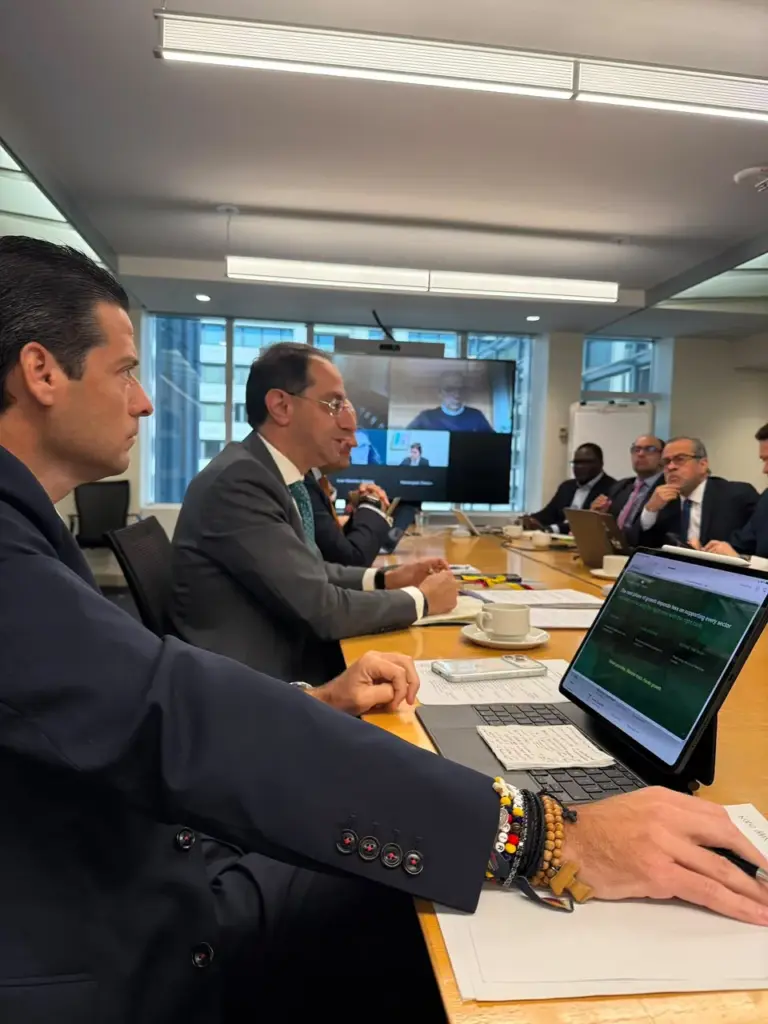
Specifically, it is pointed out that there were alleged biased bidding documents and requirements that would limit the participation of local companies. In fact, 24 hours ago, the Attorney General’s Office requested information from the entity on that specific point.
EL TIEMPO investigated and established that one day before the complaints became known, the director of Colombia Compra Eficiente, Cristóbal Padilla, received a letter requesting the direct revocation of the opening of that millionaire process.
The document mentions everything from collusion to favoritism towards a specific manufacturer.
Attorney General’s Office is already investigating
This newspaper accessed the terms and conditions of the millionaire contract, which specifies that it is a public tender for the subscription of a framework price agreement for 300 billion pesos, for the contracting of cybersecurity services structured in functional segments with national coverage.
According to the process schedule, the contract will be signed on October 26 and will have a two-year execution period.
Among the information requested by the second Attorney General’s Office for the preventive oversight of Public Function –headed by Samuel Arrieta- is the delivery of evidence demonstrating the real plurality of bidders, the dependence on authorizations issued by manufacturers, the possible existence of unique channels, the selection of brands in secondary operations, the economic evaluation methodology, and the management of exchange rate risk.
They even demanded explanations regarding experience requirements, personnel conditions, technical scoring factors, and possible inconsistencies between the bidding document, annexes, formats, and the draft of the process.
And in the letter to Padilla, signed by lawyer Nicolás Contreras Bonilla, the revocation of the process is requested, after warning that the technical structuring of the bidding document was carried out behind closed doors, with the intervention of external actors of unknown identity.
Technological bias
Even in the public hearing for risk allocation and clarification of terms and conditions, held on July 15, companies in the sector made serious warnings.
“All participants independently and consistently agreed in warning of the existence of a technological bias in the structuring of the Cybersecurity Price Framework Agreement, and in pointing out that this approach causes the risk of collusion to materialize from the very phase of submission to the demand aggregation instrument,” the letter reads.
And it is stated that the structuring of the process artificially closed a market made up of more than 300 enabled companies in the country: “Reducing it, due to technical conditioning, to a universe of fewer than five bidders with the real capacity to meet all the required conditions. This reduction is not due to an objective technical need of the entity, but to a defective structuring and an incomplete and insufficient market analysis, both in terms of supply and demand.”
Manipulated technical sheet?
Regarding the technical sheet, there is a note in the complainant’s letter that would reveal the alleged irregularity.
“(…) There is a note that reveals the external origin of the document, in which a third party sends the file to an entity official with the expression: «Mauricio, I send you the sheet with conditions…». This note shows that the technical specifications were not autonomously constructed by the structuring entity, but rather supplied by an external actor whose interest has not been revealed, and whose sheets are oriented towards a single technology manufacturer,” reads the letter known by EL TIEMPO.
Padilla’s response
The Attorney General’s Office urged the entity to hold technical meetings with manufacturers, suppliers, integrators, experts, associations, and purchasing entities before advancing to the definitive stages of the process.
And when EL TIEMPO consulted Colombia Compra Eficiente on the matter, they issued a statement in which they described the transition team’s accusations as false.
“It is not true that there are irregularities in contracting processes carried out by this Agency. In particular, it is false that the award of the Cybersecurity Price Framework Agreement (AMP) is scheduled for next July 28. It is foreseen for October 14,” the statement reads.
And they add: “The public complaint denotes a legal ignorance of the basic concepts of the structuring process of Framework Agreements. These tools are not a conventional contract. They are an umbrella contract where the Agency conducts an initial price negotiation with providers of a specific good or service, at zero value.”
Furthermore, they point out that an invitation was sent to interested parties a year ago, which would disprove an alleged intention to accelerate or direct the process.
And they indicated that the entity had already requested the accompaniment of the Attorney General’s Office since last July 16 and that it is not true that there are biased bidding documents, as the design of the process incorporates standardized technical criteria, guaranteeing the plurality of bidders.
(Consult all articles from EL TIEMPO’s Investigative Unit here)
They also emphasized that they have been available to carry out the corresponding transition to clear up any doubts about this or any other contract: “But the elected president’s team has not attended.”
INVESTIGATIVE UNIT
u.investigativa@eltiempo.com
@UinvestigativaET
Follow us now on Facebook